
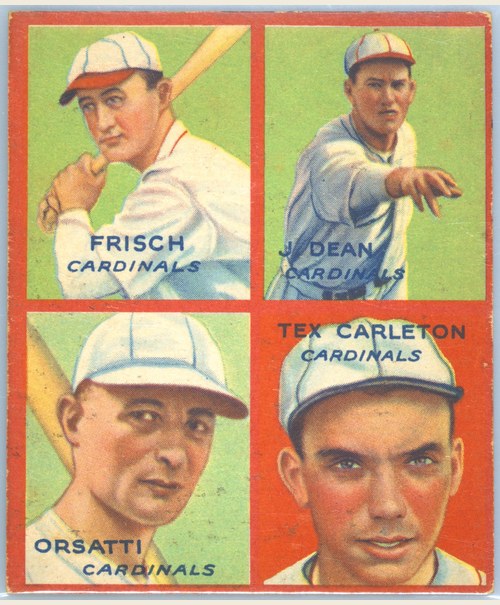
1935 Goudey 4-in-1 #10 — Frankie Frisch / Dizzy Dean / Ernie Orsatti / Tex Carleton
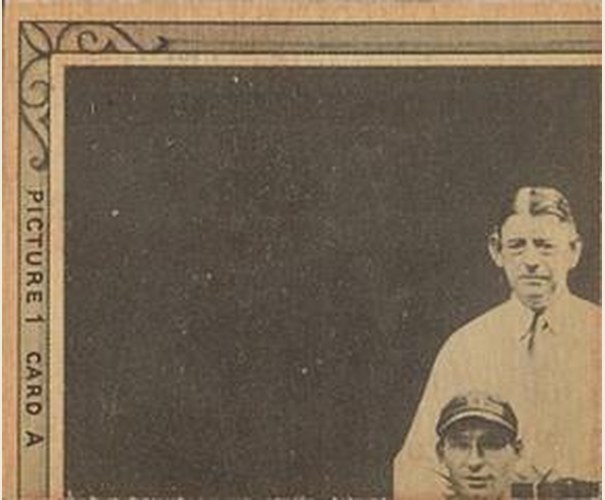
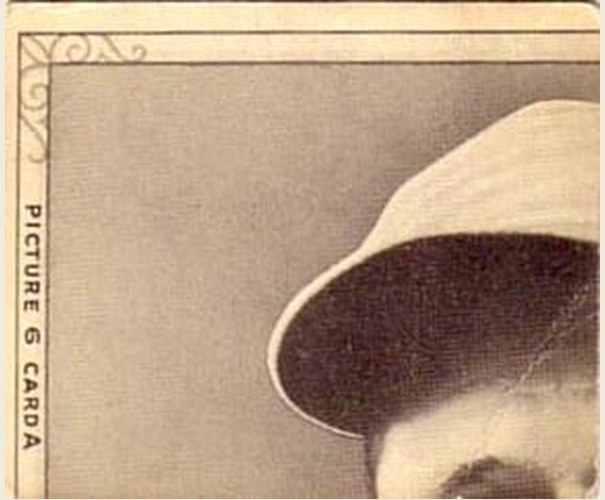
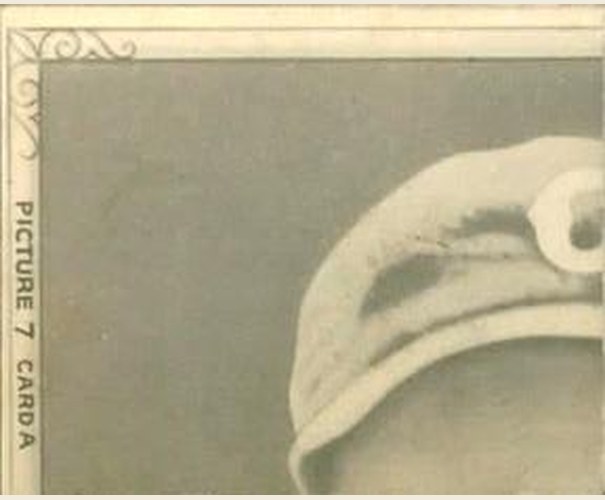
The backs of 1935 Goudey cards are puzzle pieces, not player bios: each is marked "PICTURE N — CARD X" and builds one of the set's nine puzzles. This front was printed with 4 different backs (1A, 2A, 6A, 7A), so it counts 4 entries toward the 114-combination master set.
Puzzles 1-7 were each printed twice with different front panels, and one side of each pairing is much scarcer: for this front, 2A, 7A are the short-printed combos (per Beckett's tags and the Dec 1995 VCBC press-panel analysis).
The card & its puzzle backs

About Frankie Frisch
Frank Francis Frisch jumped straight from the Fordham campus to John McGraw's New York Giants in 1919 without a day in the minors — a four-sport college star whose speed had already made him "the Fordham Flash." The switch-hitting second baseman sparked four straight pennant winners from 1921–24, taking World Series titles in 1921 and 1922, before the December 1926 blockbuster that swapped him for Rogers Hornsby. St. Louis got the better of it: Frisch hit .337 with a league-best 48 steals and a still-standing 641-assist record at second base in 1927, won NL MVP honors in 1931 while leading the Cardinals past the Athletics in the Series, and as player-manager drove the rowdy Gashouse Gang to the 1934 championship over Detroit. This 4-in-1 panel catches him in 1935 — an All-Star in each of the game's first three years — still doubling as skipper, grouped with Dizzy Dean, Ernie Orsatti, and Tex Carleton off his reigning-champion club. He retired in 1937 batting .316 with 2,880 hits, the switch-hitter record until Pete Rose, plus 58 World Series hits, most ever by a player who never wore Yankee pinstripes. Cooperstown called in 1947.
Sources: Wikipedia · Baseball-Reference · SABR
About Dizzy Dean
Jay Hanna “Dizzy” Dean (1910–1974) rose from an Arkansas sharecropping family to Depression-era folk hero, picking up his nickname in the Army at Fort Sam Houston, where a sergeant branded him “the dizziest kid I ever had in my outfit.” Debuting with a complete-game three-hitter on 1930’s final day, he led the National League in strikeouts four straight seasons (1932–35) and fanned a modern-record 17 Cubs in 1933. In 1934 the Gashouse Gang ace went 30–7 — still the NL’s last 30-game winner — won the MVP, and outdid his “Me an’ Paul” boast as he and brother Paul totaled 49 wins plus all four World Series victories over Detroit, Dizzy sealing the title with an 11–0 Game 7 shutout. Goudey’s 1935 4-in-1 catches him at that very peak: printed “J. Dean” on card #10’s upper-right panel beside player-manager Frankie Frisch — who handed him the Game 7 ball — and fellow Cardinals Ernie Orsatti and Tex Carleton. Dean won 28 more games in 1935, but Earl Averill’s All-Star Game liner off his toe in 1937 wrecked his arm. He retired 150–83, became a beloved broadcaster (“slud into third”), and entered the Hall of Fame in 1953.
Sources: Wikipedia · Baseball-Reference · SABR
About Ernie Orsatti
Hollywood was Ernie Orsatti's first love: the Los Angeles native worked as a movie stuntman and doubled for Buster Keaton in 1924's Sherlock, Jr. before Keaton, part-owner of the Pacific Coast League's Vernon Tigers, handed him a pro contract in 1925. Branch Rickey soon bought him for St. Louis, and the left-handed-hitting outfielder spent all nine of his big-league seasons with the Cardinals (1927-1935), batting .300 or better six times, peaking at .336 in 1932, and finishing at .306 lifetime. A head-first-sliding showman whose flashy wardrobe, The Sporting News wrote, made him stand out “like a peacock in the ranks of the Gashouse Gang,” Orsatti played in four World Series and hit .318 across all seven games of the 1934 title win over Detroit. Goudey's 4-in-1 panel catches that champion core — Orsatti beside Frisch, Dean, and Carleton — in what proved his final big-league season: rather than accept a 1936 demotion, he quit for Hollywood, where the Orsatti brothers' talent agency represented stars like Judy Garland and Betty Grable.
Sources: Wikipedia · Baseball-Reference · SABR
About Tex Carleton
“Tex” was a sportswriter’s invention — Ernest J. Lanigan pinned it on the Comanche, Texas ranch kid after his 20-win 1931 season for Houston alongside Dizzy Dean. A deceptive sidearm right-hander who left TCU for pro ball, James Otto Carleton reached the Cardinals in 1932, won 17 games in 1933 — matching Carl Hubbell zero-for-zero through 16 innings that July — and 16 more for the 1934 Gashouse Gang, starting Game Four of their World Series win over Detroit. His lower-right panel on card #10 is pure Gashouse Gang: he shares it with Frankie Frisch, Ernie Orsatti, and Dean, the star whose shadow he openly resented — the two brawled on the field in 1936. The Cardinal portrait was already dated: dealt to Chicago on November 21, 1934, the day the Yankees bought Joe DiMaggio, Carleton helped the Cubs to the 1935 and 1938 pennants. Thought washed up after 1939 in the minors, he resurfaced with Brooklyn, no-hit the Reds on April 30, 1940, and closed his final season with exactly 100 wins.
Sources: Wikipedia · Baseball-Reference · SABR
Graded population (PSA & SGC)
| Grader | Total | 10 | 9 | 8 | 7 | 6 | 5 | 1-4 | Auth |
|---|---|---|---|---|---|---|---|---|---|
| PSA | 208 | 0 | 0 | 3 | 5 | 11 | 29 | 156 | 4 |
| SGC | 98 | 0 | 0 | 0 | 1 | 1 | 7 | 81 | 8 |
Graded population — a scarcity guide, not a price. Snapshot 2026-08-06. Half-grades fold down (8.5→8). Totals are summed across this front's graded back combinations.
PSA by back: 1A 94 · 2A (SP) 90 · 6A 12 · 7A (SP) 12
SGC by back: 1A 46 · 2A (SP) 40 · 6A 7 · 7A (SP) 5
Find this card
Search T206 Cards Buy It Now on eBay eBay auctions ending soon
As an eBay Partner Network affiliate, T206Cards.com may earn from qualifying purchases.
Related cards
More St. Louis Cardinals cards:
Other fronts in the same puzzle pictures:
- #1 Charlie Berry / Bobby Burke / Red Kress / Dazzy Vance
- #4 Mickey Cochrane / Charlie Gehringer / Tommy Bridges / Billy Rogell
- #5 Hughie Critz / Dick Bartell / Mel Ott / Gus Mancuso
- #6 Joe Cronin / Carl Reynolds / Max Bishop / Bill Cissell
- #8 George Earnshaw / Jimmy Dykes / Luke Sewell / Luke Appling
- #11 Burleigh Grimes / Chuck Klein / Kiki Cuyler / Woody English
- #14 Willis Hudlin / Glenn Myatt / Adam Comorosky / Jim Bottomley
- #16 Willie Kamm / Oral Hildebrand / Earl Averill / Hal Trosky
Frequently asked questions
What is the 1935 Goudey 4-in-1 Frisch/Dean/Orsatti/Carleton card?
It is one of the 36 unnumbered fronts of the 1935 Goudey 4-in-1 set (R321), picturing Frankie Frisch / Dizzy Dean / Ernie Orsatti / Tex Carleton. The 2-3/8 by 2-7/8 inch card carries four color portraits on the front and a puzzle piece on the back. Checklists that number the set (Old Cardboard / the Burdick Collection convention, alphabetical by the upper-left player) list it as #10 of 36.
How many backs does this card have?
4: 1A, 2A, 6A, 7A. Every 1935 Goudey front was printed with two to four different puzzle-piece backs, and collectors chasing the 114-combination master set track each front/back pairing separately. The 2A, 7A printings are short prints per Beckett and the VCBC press-panel analysis.
How many cards are in the 1935 Goudey 4-in-1 set?
36 fronts, each with four players (144 panels picturing 138 different men). Counting the two-to-four puzzle backs each front was printed with, the master set runs to 114 front/back combinations, 42 of them short prints. A complete set of all nine puzzles requires 72 different backs.
Sources: Trading Card Database, Old Cardboard, the Burdick Collection catalog (Metropolitan Museum of Art), SABR Baseball Cards research, Baseball-Reference, PSA & SGC population reports, and the Dec 1995 VCBC press-panel analysis. Card data compiled and maintained by T206Cards.com. Page last updated 2026-08-14.