
1951 Topps Red Back #26 Luke Easter
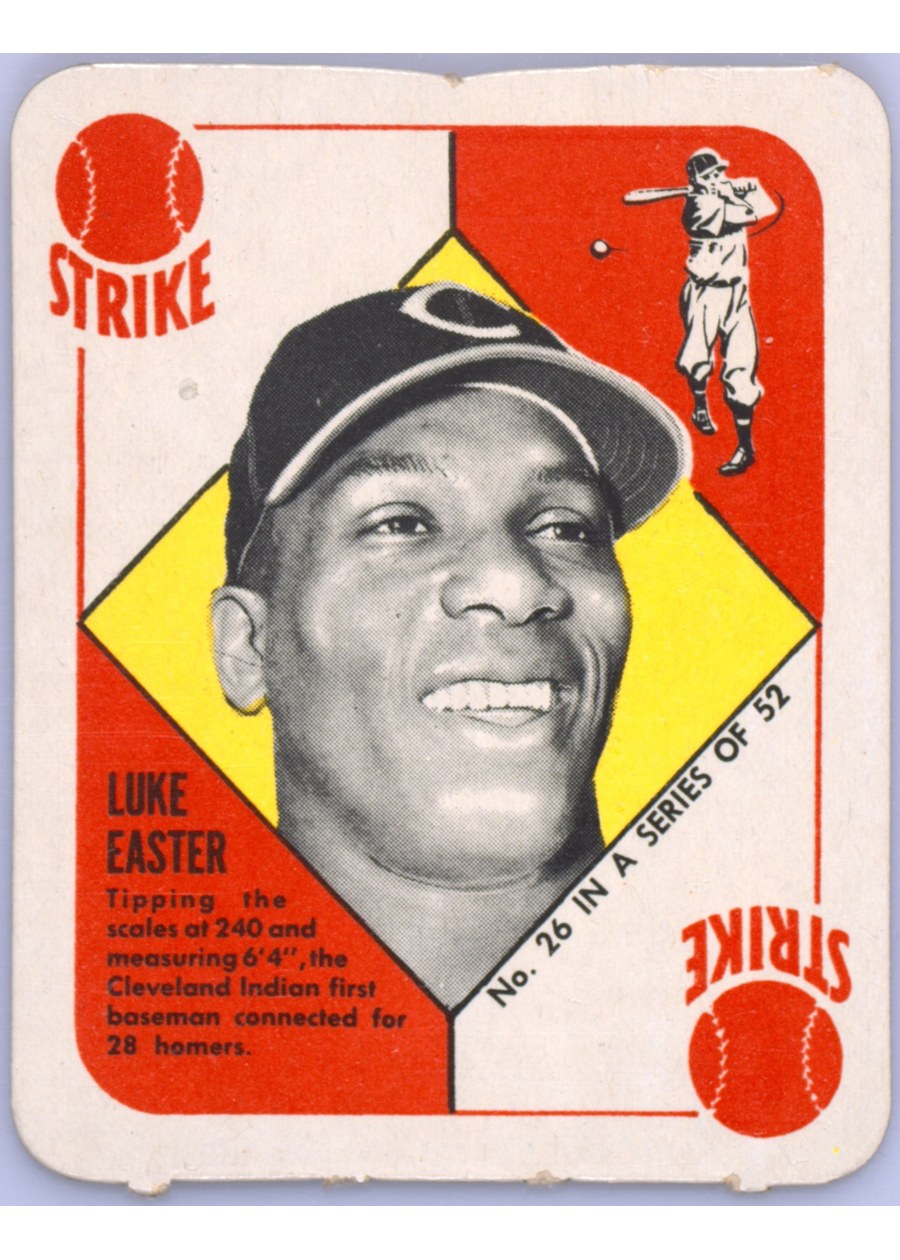
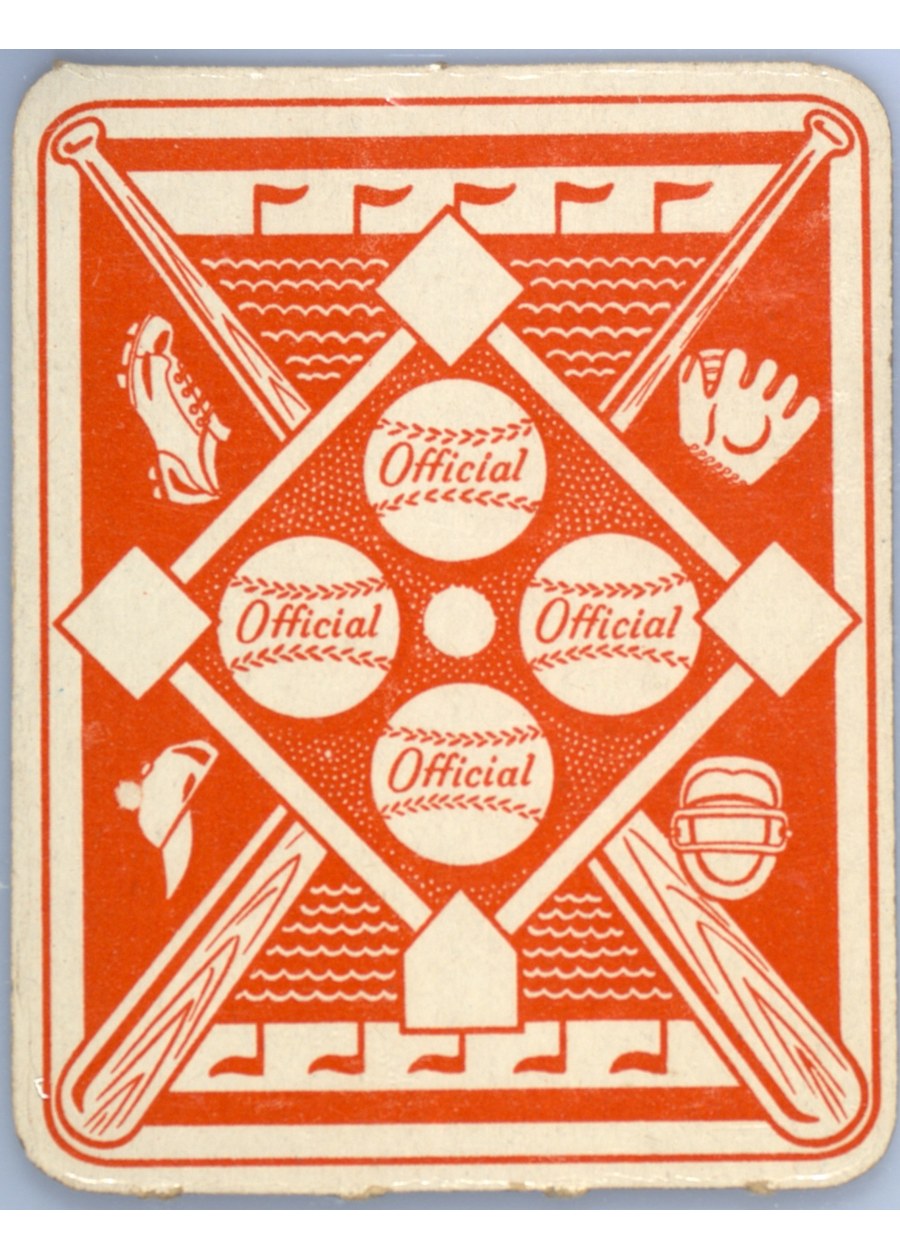
About Luke Easter
Easter opened 1950, his first full major league season, in the outfield, still slowed by the knee operated on in 1949, while Mickey Vernon kept first base and Cleveland crowds kept booing. His first home run came May 6 off Allie Reynolds of the Yankees. On June 23 he drove a Joe Haynes pitch 477 feet into the second deck in right field at Municipal Stadium, said to be the longest ball ever hit there. Cleveland traded Vernon to Washington to clear first base, where Easter played 128 games. He finished at .280 with 28 home runs and 107 RBIs as a 34-year-old rookie, and he led the American League in times hit by a pitch.
Luke Easter was a 6-foot-4, 240-pound first baseman who batted left-handed and hit home runs so long they were called Easter Eggs. With the 1948 Homestead Grays he batted .363, tied Buck Leonard for the Negro National League lead with 13 home runs, led the league with 62 RBIs, and helped beat the Birmingham Black Barons in the Negro World Series. Bill Veeck signed him for Cleveland on February 19, 1949; Easter told Veeck he was 27, and he was 33. He opened that year with the San Diego Padres, hitting .363 with 25 home runs before knee surgery, and debuted for the Indians on August 11. He stayed with Cleveland through 1954 and hit 93 major league home runs. In 1952 a two-week demotion to Indianapolis turned his season around, and he finished with 31 home runs, 13th in the MVP vote, and The Sporting News award as American League Player of the Year. Knee and ankle injuries ended his big league career, but he played in Triple-A until 1963 and won the International League MVP award with Buffalo in 1957. He was shot and killed in a payroll robbery outside a bank in Euclid, Ohio, on March 29, 1979, and entered the International League Hall of Fame in 2008.
Sources: Wikipedia · SABR BioProject · Baseball-Reference · Baseball-Reference
Graded population (PSA & SGC)
| Grader | Total | 10 | 9 | 8 | 7 | 6 | 5 | 1-4 | Auth |
|---|---|---|---|---|---|---|---|---|---|
| PSA | 301 | 0 | 36 | 91 | 40 | 46 | 47 | 41 | 0 |
| SGC | 44 | 0 | 2 | 2 | 5 | 2 | 6 | 27 | 0 |
Graded population — a scarcity guide, not a price. Data as of 2026-10-19. Half grades fold down for both graders (8.5→8); PSA qualified slabs (OC, ST, PD, MC and the like) are not counted.
Find this card
Search T206 Cards Shop 1951 Topps cards Live auctions Buy It Now on eBay Sold prices
As an eBay Partner Network affiliate, T206Cards.com may earn from qualifying purchases.
Related cards
More Cleveland Indians cards:
- Red Back #8 Early Wynn
- Red Back #12 Jim Hegan
- Red Back #13 Dale Mitchell
- Red Back #22 Bob Feller
- Red Back #23 Ray Boone
- Red Back #29 Bob Kennedy
- Red Back #35 Al Rosen
- Red Back #40 Mike Garcia
- Blue Back #31 Lou Brissie
- Blue Back #52 Sam Chapman
- Connie Mack's All-Star Tris Speaker
- Major League All-Star Larry Doby
- Major League All-Star Bob Lemon
Frequently asked questions
What is the 1951 Topps Red Back #26 card?
It is Red Back #26 in the 135-card 1951 Topps Baseball checklist, picturing Luke Easter of the Cleveland Indians.
Is 1951 Topps Red Back #26 a rookie card?
Yes - Red Back #26 is the rookie card of Luke Easter.
How many cards are in the 1951 Topps Baseball set?
135 cards across five issues - the Red Backs and Blue Backs (52 each), nine Team cards, and eleven each of Connie Mack's All-Stars and the Major League All-Stars. With the Zernial and Holmes variations and both versions of each Team card the master set is 146. All 135 count toward the full set; Jim Konstanty, Robin Roberts and Eddie Stanky, the three rarest Major League All-Stars, are so rarely seen that collectors often count a complete set as 132 without them.
Sources: PSA, BaseballCardPedia, Trading Card Database, Baseball-Reference, PSA & SGC population reports. Card data compiled and maintained by T206Cards.com. Page last updated 2026-10-26.